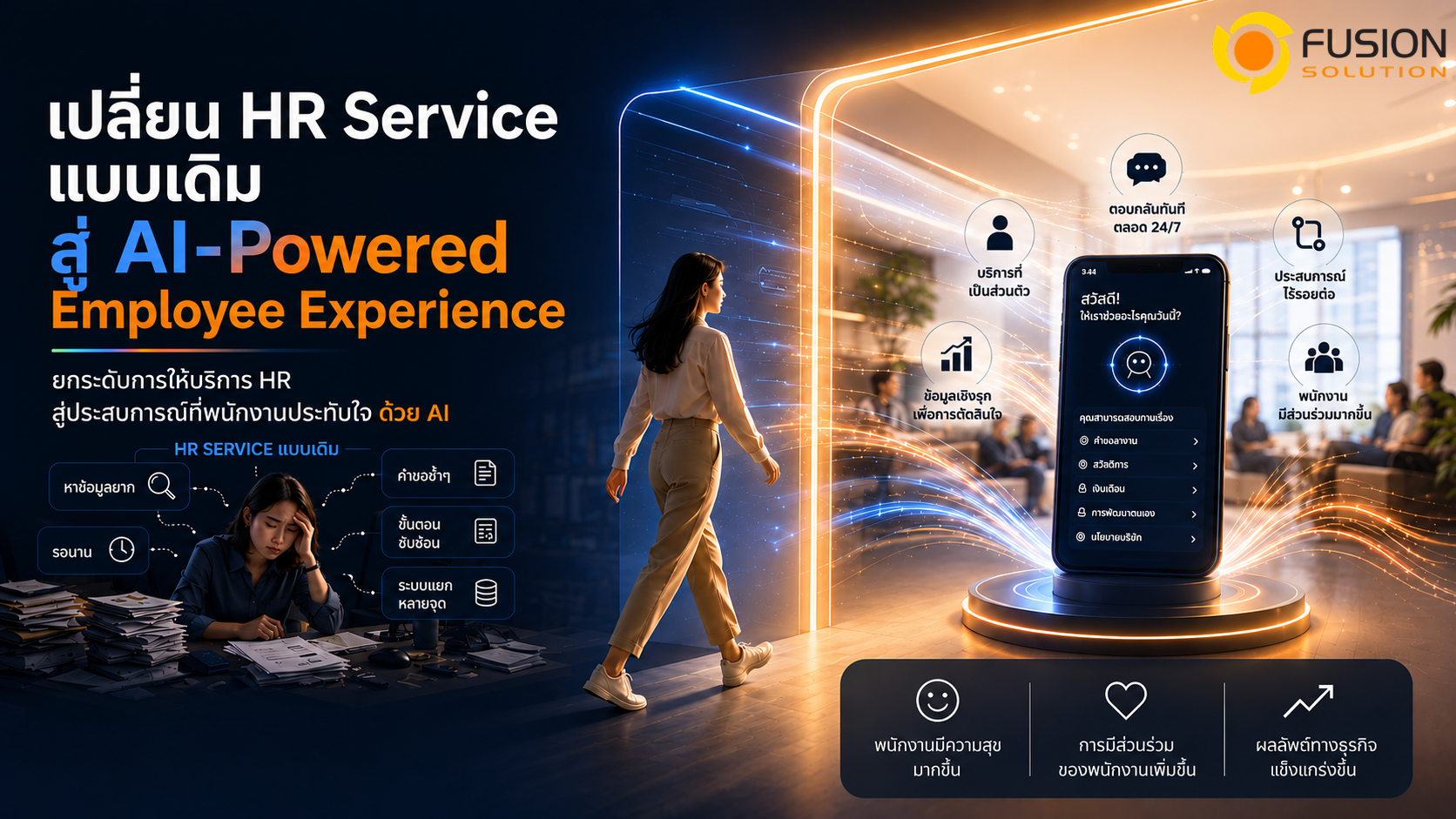
Many employees have encountered similar situations at work, such as needing a work certificate but not knowing who to contact, wanting to check benefits but unable to find the information, or having to email HR to ask about things they should have been able to find themselves.
In many organizations, HR services still rely heavily on emails, forms, documents, and tickets. Employees have to wait for responses from HR, even to simple questions, while HR itself spends time answering repetitive questions instead of focusing on more strategic work.
As employees become accustomed to fast, user-friendly, and accessible digital experiences, their expectations of HR change as well. Employees no longer just want an HR system; they want an experience that makes their work easier.
Employee Experience has therefore become the cornerstone of Digital HR, because it's not just about having a good back-end system, but about enabling employees to easily and quickly access information, services, and assistance from HR, in a way that aligns with the digital work environment.
What is Employee Experience?
Employee Experience, or EX, refers to all the experiences an employee gains while working with an organization, from before starting work, the first day, development, growth, receiving services from HR, to the end of the Employee Journey.
Employee Experience doesn't just refer to feelings on a single day, but rather the overall picture of all touchpoints employees encounter within the organization, such as:
- job application
- interview
- Starting work
- Accessing HR information.
- Requesting documents
- Leave of absence
- learning
- Receiving feedback
- Career growths
- Recognition of compensation and benefits.
- Contacting HR
- Using the system within the organization
Organizations that design a well-executed Employee Experience will help employees work more easily, reduce administrative complexities, and make employees feel that the organization's systems and processes truly support their work.
Why is Employee Experience important?
Employee experience is crucial because the daily experiences employees have impact their productivity, engagement, retention, and the organization's image in the long term.
If employees have to spend a lot of time searching for information, checking tickets, or waiting for responses from HR, tasks that should be completed in a few minutes could turn into days, making employees feel that the internal systems are not conducive to their work.
Conversely, if employees can find answers, complete HR requests, and track the status of requests themselves, they will spend less time on administrative tasks and more time on value-added work.
- Reduce repetitive tasks for HR.
- Increase the ease of access to information.
- Increase employee productivity.
- Support Employee Engagement
- Make HR Service more standardized.
- Create a consistent experience across all employee groups.
- It helps the organization look modern and be conducive to work.
What are the limitations of traditional HR services?
1. All matters must be handled through HR.
In many organizations, employees have to email or call HR even for basic questions such as remaining leave days, benefits, document request procedures, or how to update personal information. Because these questions arise repeatedly, HR spends a significant amount of time answering and coordinating responses.
2. Information is scattered across multiple channels.
HR information may be found in multiple locations, such as the intranet, email, PDF, SharePoint, HR portal, or various versions of internal documents, making it difficult for employees to determine which information is accurate and up-to-date.
3. Opening a ticket takes a long time.
Some organizations use tickets as the primary channel for contacting HR, which is suitable for complex cases. However, if every matter, even a simple question, requires opening a ticket, employees may find contacting HR slow and cumbersome.
4. Inconsistent experience.
Different groups of employees may receive different answers depending on who answers the question, the channel used, or the version of information they access. Without a clear knowledge base and process, employee experiences will be inconsistent.
5. HR was pulled back into administrative tasks.
When HR is overwhelmed with answering questions, reviewing documents, and following up on numerous requests, strategic tasks such as Workforce Planning, Employee Engagement, Learning Strategy, or Talent Development may be de-emphasized.

What is Employee Self-Service?
Employee Self-Service (ESS) is a concept that allows employees to access information and complete certain HR transactions themselves, without needing to contact HR every time.
- View profile
- Update contact information
- Check your remaining leave days.
- Submit a leave request
- View payslip
- Check benefits
- Download documents
- See company policy
- Track request status
- Find the answers from HR Knowledge Base.
A good Employee Self-Service system should be easy to use, easy to understand, and accessible from the devices employees actually use, whether it's a computer, mobile phone, or their daily work tools.
When employees can handle basic tasks themselves, HR can reduce repetitive tasks, and employees receive answers faster.
How can AI assistants transform HR services?
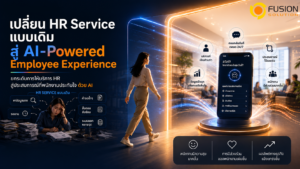
In traditional HR services, employees have to know where the information is, which portal to access, or who to contact with their questions. AI Assistant transforms this experience into a natural language-based question-and-answer process.
- How many vacation days do I have left?
- How can I request a certificate of employment?
- Work Policy Where are you from Home?
- What does the healthcare benefit cover?
- What courses do I need to take for this role?
- What stage is the status of my request?
AI assistants can help employees find information faster, reduce searching across multiple systems, and enable HR services to function more like the digital experience employees are accustomed to in their daily lives.
However, AI should not be viewed as a complete replacement for HR, but rather as an assistant to reduce repetitive tasks and free up HR time for tasks requiring human-like decision-making, understanding, and handling complex employee issues.
Why is the HR Knowledge Hub important?
AI assistants and self-service systems can only be effective if organizations have accurate, systematic, and up-to-date HR data.
HR Knowledge Hub is a repository of important information that employees can access, such as:
- Company Policy
- Leave of absence process
- Benefits
- Procedure for requesting documents
- System user manual
- Frequently asked questions
- Payroll information
- Learning information
- Performance data
- Guidelines for contacting HR.
If the information in the Knowledge Hub is unclear or outdated, AI Assistant may provide incomplete answers, or employees may still need to ask HR for clarification.
Therefore, improving the Employee Experience doesn't start with AI alone, but must begin with systematically managing HR data first.
What should Employee Experience be linked to?
Core HCM
Core HCM is the primary database for employees, containing information such as personal data, position, department, manager, and employment status. If this basic information is incorrect, Employee Self-Service and the AI Assistant may provide inaccurate answers.
Talent Acquisition
Employee experience begins with the candidate journey, not the first day of work. A good application process and communication with the applicant helps create a positive impression even before they join the organization.
Onboarding
Onboarding is a crucial period that determines the first impression of new employees. Having a clear Digital Onboarding Journey helps employees start their work with greater confidence.
Performance Management
Effective performance management helps employees receive continuous feedback, understand their goals, and see a clearer path to growth.
Learning Management
Learning Management helps employees access learning and skill development more easily, especially when learning is linked to the skill gap and career development.
Compensation Management
Employee experience also involves understanding compensation, benefits, and total rewards. If employees have a clearer view of the overall value the organization provides, it helps reduce confusion and increase trust.
Workforce Analytics
Workforce Analytics helps organizations see trends, needs, and pain points of employees to improve the employee experience from real data.

How to start upgrading Employee Experience.
- Explore the pain points of employees.
Start by identifying where employees are encountering difficulties in the process. For example, they might not be able to find information, wait a long time for HR to respond, find the system difficult to use, or have to re-enter information multiple times. Listening to employee feedback and reviewing actual usage data will help the organization determine which areas need improvement first. - Organize HR data into a system.
Before implementing self-service or AI assistants, organizations should organize their HR data clearly, such as policies, procedures, forms, and frequently asked questions. If the data is scattered, both employees and AI will have difficulty finding accurate answers. - Add Employee Self-Service.
Start with services that employees use frequently, such as requesting leave, viewing payslips, checking benefits, requesting documents, or updating personal information. These services should be easy to use and reduce unnecessary steps. - Use AI Assistant for recurring questions.
Frequently asked questions to HR, such as those regarding benefits, leave days, payroll, or policies, are suitable for starting to use AI Assistant to help answer general questions. However, for personal or sensitive cases, there should be a channel for HR to take over and handle them. - Design a continuous employee journey.
Employee experience shouldn't be a fragmented system, but rather a continuous link from onboarding, learning, performance, compensation to HR service. The more ongoing the journey, the more employees will feel that HR work is easy and accessible. - Measure results and continuously improve
Organizations should measure whether the Employee Experience is actually improving, such as whether the number of tickets has decreased, whether responses to questions are faster, whether employees are using self-service more, and whether employee feedback is better.
Good employee experience isn't just about a pretty system.
Many organizations invest in HR technology, but employees still find contacting HR cumbersome. The problem isn't just with the system's interface, but with the overall user experience.
- Easy access to information
- HR tasks can be done conveniently.
- Get answers faster
- Spend less time on administrative tasks.
- Understand your rights and policies.
- Knowing which way to go when asked a question.
- Receive consistent service
If the system looks nice but is difficult to use, the data is outdated, or employees still have to ask HR about everything, the experience isn't good enough.
A good employee experience must therefore be designed from the employee's perspective, not just from the system's perspective.
Employee Experience is the summary of HR Transformation.
Throughout the Workday HCM series, we start by laying the foundation for HR data through Core HCM, followed by Talent Acquisition, Onboarding, Performance Management, Learning Management, Compensation Management, and Workforce Analytics.
All of this isn't just about changing the HR system piece by piece, but about creating a better work experience for both employees and the organization.
- Core HCM helps ensure data accuracy.
- Talent Acquisition helps you get off to a good start with an organization.
- Onboarding helps new employees get ready for work faster.
- Performance Management helps employees receive feedback.
- Learning Management helps employees develop skills.
- Compensation Management helps employees understand their compensation.
- Workforce Analytics helps organizations plan their workforce better.
- Employee Experience helps make all of these processes truly accessible to employees.
When HR Technology is systemically integrated, Employee Experience will no longer be just a fancy word, but a tangible result that employees can experience in their daily work lives.
Summary
Employee Experience refers to all the experiences an employee has throughout their Employee Journey, from applying for a job, starting work, development, receiving service from HR, to growth within the organization.
Organizations that still rely on email, ticketing, and manual processes may waste employees' time and place excessive repetitive tasks on HR.
Implementing Employee Self-Service, HR Knowledge Hub, and AI Assistant can make HR services more accessible, faster, and aligned with the expectations of employees in the digital age.
For organizations looking to elevate their Digital HR Transformation, designing a great Employee Experience is a crucial step in transforming HR from a back-end system to an experience that helps employees work better every day.